
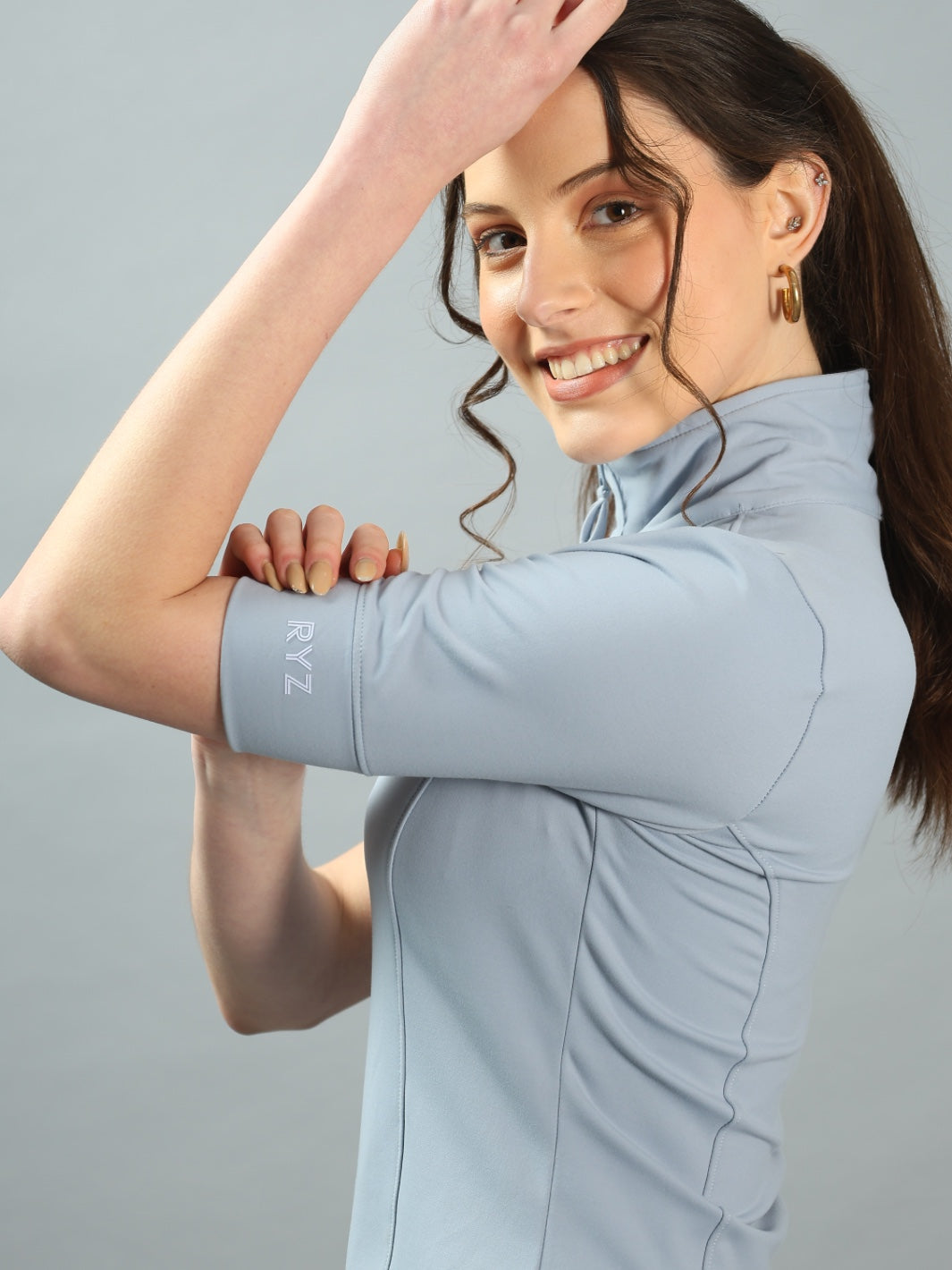
-->
Wellness & Performance · Science
How Activewear Affects Your Confidence and Performance — What the Research Says
The science behind why what you wear to the gym isn't just about style — it genuinely changes how you move, think, and push yourself.
You already know the feeling. You slip into a fresh, well-fitted set before a session, catch yourself in the mirror, and something shifts. Your posture straightens. Your head gets clearer. You haven't touched a weight yet — but you're already in the zone.
This isn't vanity, and it isn't placebo. It's a documented psychological phenomenon called enclothed cognition — and it has real implications for how you train, how hard you push, and how consistently you show up. At RYZ, it's one of the core ideas behind every piece we design.
What is enclothed cognition?
In 2012, psychologists Hajo Adam and Adam D. Galinsky at Northwestern University published a study that gave a name to something athletes and performers have known instinctively for decades. Their research demonstrated that clothing carries symbolic meaning — and that meaning directly influences our psychological state and behaviour when we physically wear the garment.
In their experiments, participants wearing a white coat described as a "doctor's coat" significantly outperformed those wearing the identical coat described as a "painter's coat" on sustained attention tasks. The garment was the same. The outcome wasn't. What changed was the symbolic weight the wearer placed on what they were wearing.
The term they coined — enclothed cognition — describes this: the systematic influence that clothes have on the wearer's psychological processes. It depends on two things happening at once: the physical act of wearing the clothes, and the symbolic meaning the wearer associates with them.
"The clothes you wear don't just reflect how you feel — they actively shape it."
Apply that to your training. When you put on activewear you associate with effort, discipline, and physical capability — the way RYZ women's training sets are designed to make you feel — your brain takes that cue and adjusts accordingly. You're not just getting dressed. You're initiating a performance state.
Does workout clothing actually affect performance?
This is one of the most searched questions in the activewear space — and the answer, backed by a growing body of research, is yes. But not just in the ways you might expect.
Mental readiness — the pre-workout trigger
Getting dressed in dedicated activewear creates a psychological transition. Research on behavioural conditioning suggests that consistent clothing rituals help the brain enter focused, goal-oriented states more quickly. It's a mental warm-up that happens before you've started moving. For women who train consistently, this ritual effect compounds over time — the clothing itself becomes a trigger for focus and follow-through.
Consistency and habit formation
Wearing clothes you perceive as activewear makes you meaningfully more likely to stick to an exercise routine — and to carry healthier habits into the rest of your day. This behavioural ripple effect is one of the most practically useful findings in the research. The act of wearing performance clothing signals to yourself that you're someone who trains. Identity reinforcement, worn on the body.
Physical freedom and confidence in movement
Activewear that fits well and moves with your body removes what psychologists call distraction load — the mental overhead of managing discomfort, self-consciousness, or restricted movement mid-session. When your clothing disappears into the background, your attention goes entirely to the work. This is why the RYZ fit philosophy centres on second-skin construction — we engineer pieces to move with you, not against you, so nothing pulls focus.
The role of colour in athletic performance
Colour psychology research suggests that the hues you train in aren't neutral. Warm tones — reds, burnt ambers, deep corals — are associated with energy and perceived strength. Cooler tones like slate, sage, and navy are linked to calm focus and endurance. It's why RYZ seasonal palettes are curated with performance psychology in mind, not just trend forecasting.
The confidence loop — how it compounds
One of the most interesting aspects of enclothed cognition in an athletic context is how it compounds. Confidence in your clothing leads to better movement. Better movement leads to stronger sessions. Stronger sessions reinforce your sense of capability. And that reinforced capability makes you reach for your kit again tomorrow.
Psychologists describe this as a positive performance loop. Your activewear is the on-ramp. This is what we mean at RYZ when we say we're not just designing clothing — we're designing confidence infrastructure.
- 01You put on activewear you associate with performance and capability
- 02Your brain internalises the symbolic cue — "I'm here to work"
- 03Focus, motivation, and physical readiness increase before you've started
- 04You perform better, move more freely, and push harder
- 05Positive results deepen the association — the loop reinforces itself
Why fit and fabric are part of the psychology
The psychological benefits of activewear aren't separate from the physical design — they're inseparable from it. Clothing that fits well and functions correctly creates the conditions for enclothed cognition to work. Clothing that bunches, rides up, restricts movement, or makes you self-conscious actively works against it.
Performance fabrics — four-way stretch, compression, sweat-wicking technology — do more than keep you comfortable. They change how your body feels in motion, and how your body feels in motion is your psychological state. This is embodied cognition: your physical sensations and your mental experience are happening at the same time, shaping each other.
Every RYZ piece is built around this principle. Our high-waist leggings and training sets are constructed to provide compression where it supports performance and freedom where movement demands it — because when you stop thinking about what you're wearing, you start thinking about what you can do.
How to choose activewear that actually works for you
The research points to a clear framework. Activewear works hardest when you make intentional choices — not just about style, but about the psychological associations you're building.
- —Choose pieces you genuinely love the look of — aesthetic confidence has measurable functional value
- —Prioritise fit over size labelling — clothing that fits your actual body enables free movement and real confidence
- —Pick colours that match the training state you want — warm tones for intensity, cool tones for focus
- —Invest in quality you associate with seriousness — the symbolic meaning of "proper kit" matters
- —Build a getting-dressed ritual — consistency deepens the psychological trigger over time
- —Choose fabrics that perform — because how your body feels is how your mind performs
The bottom line
What you wear to train is not superficial. Enclothed cognition research makes a compelling case that your activewear is part of your performance stack — as real in its impact as your warm-up, your sleep, or your programme. The clothes you wear shape the thoughts you think, the effort you give, and the consistency you build.
Dressing intentionally is training intentionally. At RYZ, every piece we make starts from that belief — that the right activewear doesn't just look good on you. It makes you perform like the athlete you already are.
Designed for the performance loop.
Explore the RYZ collection — built on research, made for real training.
Shop RYZ activewearFrequently asked questions
What is enclothed cognition in fitness?
Enclothed cognition is the psychological phenomenon where the clothes you wear influence how you think, feel, and behave. In a fitness context, wearing activewear you associate with performance triggers a mental shift toward focus, effort, and capability — before your workout even begins.
Does workout clothing actually affect performance?
Yes — both psychologically and physically. Performance fabrics improve physical comfort and freedom of movement. And through enclothed cognition, wearing activewear you feel confident in measurably improves focus, motivation, and training consistency.
Why does wearing activewear make me feel more confident?
When you wear clothing you associate with strength and performance, your brain internalises that symbolic meaning. This shifts your psychological state toward readiness and capability — a well-documented effect backed by research from Northwestern University.
What activewear is best for women's confidence in the gym?
Research suggests the most effective activewear is clothing you genuinely feel good in — that fits your body well, moves freely, and that you personally associate with performance. RYZ women's activewear is designed around exactly this principle.
Is the "dress for success" idea backed by science?
Yes. The concept of enclothed cognition, published in the Journal of Experimental Social Psychology in 2012, provides the scientific framework behind "dressing for success" — showing that clothing cues have measurable effects on performance in professional, academic, and athletic contexts.

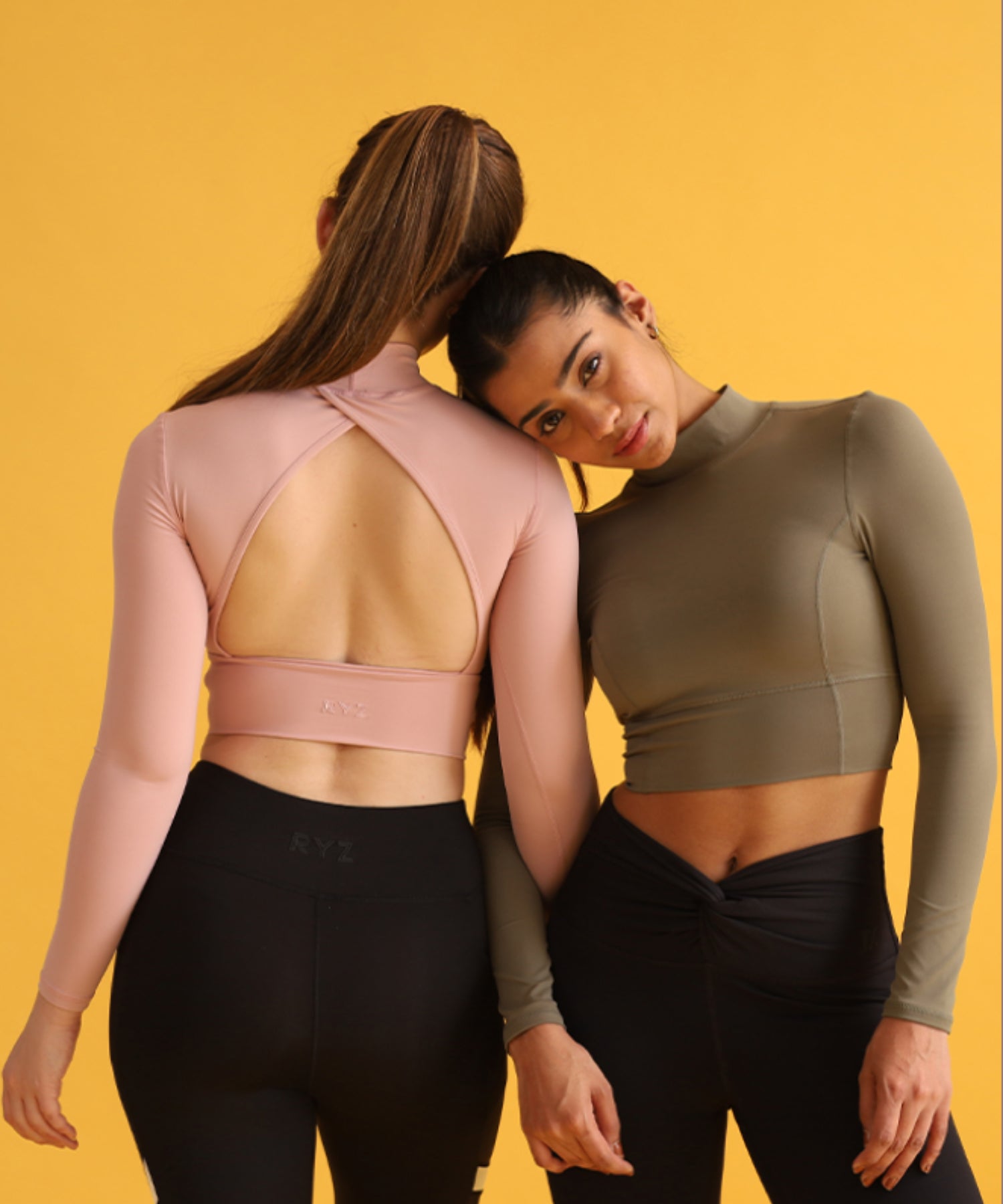


Leave a comment
All comments are moderated before being published.
This site is protected by hCaptcha and the hCaptcha Privacy Policy and Terms of Service apply.