
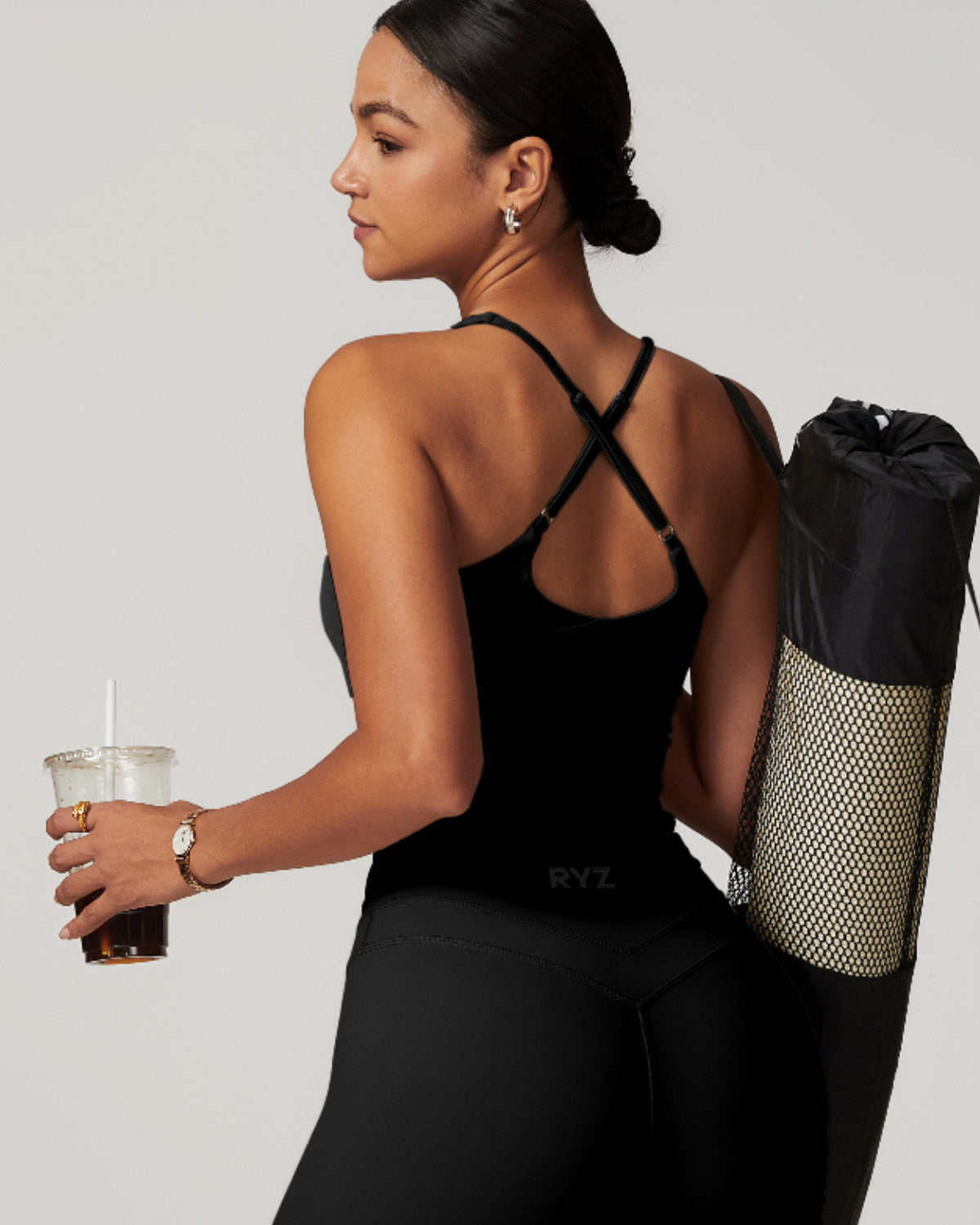
Active Fashion Guide
"Yoga wear India" is one of the highest-volume fitness searches in the country — yet most brands lump it under generic activewear. They're not the same thing. If you've ever felt restricted in a downward dog, had leggings ride up in a forward fold, or noticed your top bunching during a twist — your clothes weren't built for yoga. Here's exactly what to look for, and why it matters.
Why "Yoga Wear" Is a Different Category Entirely
Yoga is India's largest fitness category by participation. Millions of women practice daily — from morning Hatha at home to evening Vinyasa at a studio — yet the question of what to actually wear rarely gets a direct answer.
Regular activewear is engineered for high-output activities: running, HIIT, cycling, gym sessions. It optimises for moisture-wicking, durability under friction, and impact support. Yoga, by contrast, demands something different — a second-skin softness, posture transparency (so your instructor can see alignment), and fabric that stretches in every direction without restriction or resistance.
Wearing the wrong clothing to yoga is a surprisingly common experience. A waistband that digs during seated twists. A top that falls forward in a downward dog. Leggings that become translucent in a wide-legged forward fold. These aren't minor inconveniences — they interrupt focus and can affect your practice entirely.
"The right yoga wear disappears when you wear it. You stop thinking about what you're wearing and start thinking about how you're moving."
Yoga Wear vs Activewear: The Key Differences
| Feature | Yoga Wear | Regular Activewear |
|---|---|---|
| Fabric feel | Ultra-soft, smooth, skin-like | Textured, technical, firm |
| Stretch direction | 4-way (all directions) | 2-way or 4-way |
| Waistband | Wide, flat, non-restrictive | Can be elasticated / tight |
| Opacity | Opaque in all poses, including deep bends | Varies — can be sheer when stretched |
| Compression level | Light to medium (posture-supportive, not restrictive) | Medium to high (muscle compression) |
| Ideal for | Yoga, Pilates, stretching, barre, meditation | Running, HIIT, gym, cycling, sport |
| Breathability in India's climate | High — air circulation and moisture comfort | High — sweat-wicking focus |
What Makes Clothing Truly Yoga-Ready?
There are five non-negotiables when it comes to yoga-specific clothing for Indian women. Miss any of them and you'll feel it in your practice.
Yoga involves deep hip openers, backbends, twists, and inversions. Your clothing needs to move in every plane of motion without pulling, limiting range, or snapping back. Fabric with less than 30% elastane recovery will restrict you.
This is the one most brands get wrong. Leggings may look opaque standing up but become translucent in a wide-angle forward fold or pigeon pose. True yoga leggings are tested for opacity at maximum stretch — not just at rest.
Narrow or elasticated waistbands dig in during any forward or seated pose. A wide, flat waistband distributes pressure evenly and stays comfortably in place whether you're in mountain pose or happy baby.
A central front seam on leggings causes friction and pressure during floor-based poses, especially prolonged seated meditation or low lunge. A no-front-seam construction is a meaningful design choice — check the product details when this matters to your practice.
Yoga studios in India range from air-conditioned to open-air. The fabric needs to manage warmth and moisture without clinging. A dual-brushed, breathable weave is ideal — soft against skin, cool in practice.
Yoga Clothes in India: Why the Indian Context Is Different
Yoga in India isn't a fitness trend — it's a cultural practice with roots across generations. But the modern Indian woman doing yoga today has specific requirements that generic activewear brands rarely account for.
Body structure and fit. Indian women typically have broader hips, shorter torsos, and different inseam proportions compared to the body types most global activewear is designed around. Western sizing often produces a waistband that sits awkwardly or legs that bunch. Yoga poses that involve deep hip flexion amplify fit issues dramatically.
Climate variety. Yoga in Mumbai's humidity requires different fabric performance than yoga in Delhi's dry winter or Bangalore's cool evenings. Indian-designed activewear accounts for year-round conditions, not a single temperate climate.
Practice environment. Many Indian women practice at home on mats, in community halls, and in boutique studios — environments where clothing function, modesty, and comfort all intersect differently.
RYZ is designed in India, for Indian women — with precision sizing and fabric selection informed by real body structures and real practice conditions. Explore the full bottoms collection or co-ord sets built for this.
What to Wear for Yoga: A Practical Guide
Bottoms
High-waisted leggings with 4-way stretch and full opacity are the gold standard. Look for a flat, wide waistband (at least 3 inches) and fabric with enough weight to hold shape without restriction. RYZ yoga leggings are tested for opacity at every angle, including deep forward folds and wide-leg postures.
Biker shorts work well for gentler flows and Yin yoga, especially in warmer months. Avoid shorts with internal linings that bunch in seated poses.
Tops
A good yoga top stays put during inversions and doesn't fall forward during downward-facing dog. Options include fitted crop tops with a built-in bra for light to moderate compression; relaxed-fit tanks with in-built support for more restorative practices; and long-line tops for those who prefer additional coverage during floor poses.
The RYZ tops range includes the Swoosh Wrap Tank — with an in-built sports bra suited to yoga and Pilates — and the Aerocross Bra for sessions that flow between yoga and higher-impact movement.
Sets
Co-ordinated sets are increasingly popular for yoga because they solve the fit mismatch problem — the waistband and top are designed to work together. RYZ co-ord sets are crafted as complete outfits: proportions considered, fabric matched, and coverage tested as a unit.
Dressed for every pose.
Explore RYZ collections engineered for yoga, Pilates, and active life in India.
Can You Use Regular Gym Clothes for Yoga?
Technically, yes. Practically, it depends on what you own. A few quick tests to run before you roll out the mat:
Do they stay opaque in a wide forward fold? Crouch down and check in a mirror. If the fabric lightens or becomes see-through, they're not built for yoga.
Does the waistband stay flat when you sit cross-legged for 10 minutes? Narrow waistbands roll or dig during seated poses — a distraction you don't need.
Do they restrict hip rotation? Stand in a low lunge and open your hip outward. If you feel fabric pulling across the inner thigh, the stretch isn't sufficient for yoga movement.
If the answer to any of these is no, clothing made specifically for yoga will make a noticeable difference to your practice.
Yoga Wear vs Pilates Wear: Is There a Difference?
The two overlap significantly — both require softness, opacity, and unrestricted movement. The main distinction: Pilates involves more lateral and rotational movement around the core, and reformer Pilates introduces a different physical environment (you're on a machine, not a mat). For reformer Pilates, avoid excessive loose fabric that can catch on the carriage. For mat Pilates, the requirements are nearly identical to yoga wear — most well-made yoga leggings perform equally well.
Frequently Asked Questions
What is the difference between yoga wear and regular activewear?
Yoga wear is designed specifically for the range of motion, posture visibility, and floor-based movements required in yoga practice. It uses softer, more supple fabrics with full-stretch opacity, non-restrictive flat waistbands, and minimal seaming. Regular activewear is optimised for high-impact activities like running or HIIT, prioritising moisture-wicking and durability over softness and posture support.
Can I wear regular gym clothes for yoga?
You can, but it's not always ideal. Regular gym wear may become translucent in deep stretches, ride up during floor poses, or feel restrictive in hip-opening postures. Yoga-specific fabric moves with the body rather than against it, and holds opacity in every direction of stretch.
What are the best leggings for yoga in India?
The best yoga leggings for Indian women offer high waist coverage, 4-way stretch, full opacity at maximum stretch, and a wide flat waistband. RYZ Softretch® leggings are engineered to meet all of these requirements and are designed specifically for Indian body structures and climate.
What should women wear for yoga in India?
Women practicing yoga in India should opt for high-waisted, opaque leggings in soft 4-way stretch fabric, paired with a fitted or relaxed top that stays in place during inversions. Breathability matters in India's varied climate. Co-ord sets are a practical choice as the pieces are designed to work together.
Is yoga wear the same as Pilates wear?
They overlap significantly — both require softness, opacity, and unrestricted movement. Well-made yoga leggings typically perform equally well for mat Pilates. For reformer Pilates, avoid excessive loose fabric that can catch on the carriage equipment.
What fabric is best for yoga wear?
The best yoga fabrics combine polyester and elastane for stretch and recovery, with a dual-brushed surface for softness and breathability. The fabric must maintain full opacity at maximum stretch — something not guaranteed by standard polyester blends. RYZ's Softretch® fabric is built specifically to these performance standards.



एक टिप्पणी छोड़ें
यह साइट hCaptcha से सुरक्षित है और hCaptcha से जुड़ी गोपनीयता नीति और सेवा की शर्तें लागू होती हैं.